 Deutsch
 English GB
 Italiano



Search in blog
Stairs accessible to people with disabilities
What makes stairs accessible – using slope steps correctly
Making garden steps accessible is a challenge. Our slope steps allow you to make difficult terrain in outdoor areas safer by considering all user groups right from the design stage. But what exactly makes stairs accessible?
Steps on a slope should not only overcome changes in elevation, but also be easy to use for people with limited mobility, older people and children. In this respect, slope steps help create a clear, solid structure in the terrain that blends harmoniously into the overall look of your garden while providing the necessary guidance and safety when using the steps. The key is how the steps are positioned, arranged and designed to turn a steep slope into an accessible path. The sturdy construction and flexible layout of slope steps, as well as their adaptability to natural terrain, make stairs accessible and transform a steep slope into a comfortable access route.
Planning accessible stairs with slope steps
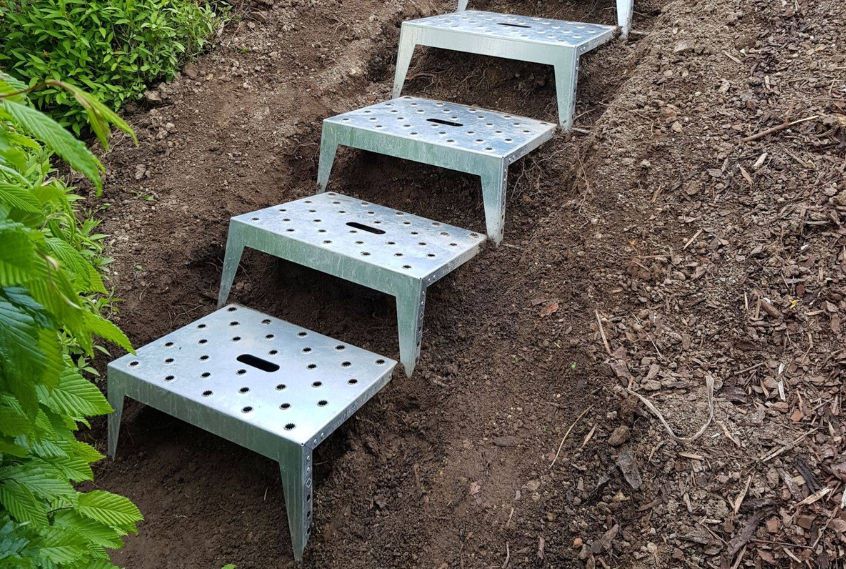
The first step in planning accessible stairs should be to focus on the route. Rather than trying to tackle steep terrain directly, it makes sense to create a gentle run of steps so that the incline is distributed evenly across each tread. You can position each tread element individually, ensuring a harmonious rhythm between placing your foot and taking the next step. This controlled placement of slope steps in the ground makes stairs accessible, as each step can be perceived consistently and used safely. You can also choose steps in different sizes in terms of width and tread depth, further increasing safety.
A clear layout is also essential, as it helps the eye and makes it possible to use the steps calmly and consistently. Our slope steps let you create level, clearly defined surfaces where the foot can find reliable support, even if people are unsure on their feet or need a walking aid. Combining the ribbed or perforated surfaces of our models creates a path that remains usable even in wet conditions and changing light. This makes your stairs not only accessible, but also provides extra stability when going up or down
Safe slope steps for comfortable paths
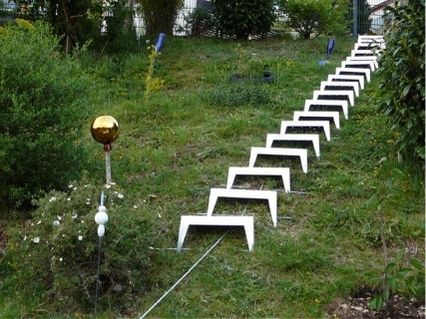
Based on these considerations, you can design your future stairs to remain comfortable to use over longer distances. Small intermediate landings – for example, using stepping stones – allow for breaks and help ensure that using the stairs does not feel strenuous. A thoughtful balance of incline and rest makes stairs accessible, because people who do not feel overwhelmed will use the path more often and with greater ease. You can also improve safety by installing handrails alongside the tread elements.
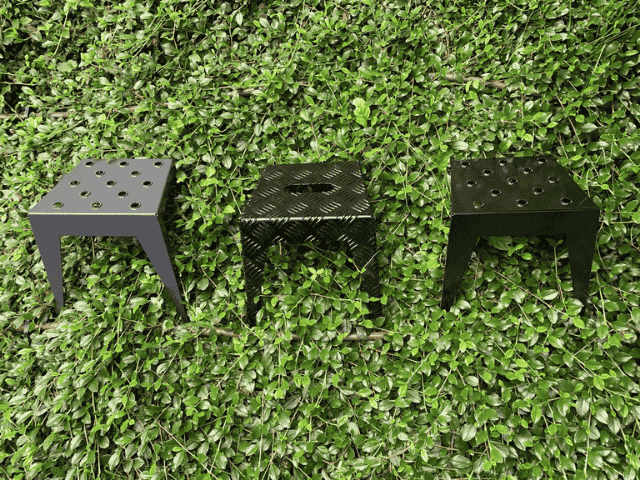
Wider steps are generally suitable for making stairs accessible, as they also allow people to walk side by side. Visual clarity is also extremely important. Different textures and individually selected colours for the slope steps can help make the edges of each tread element easier to see. This makes it possible to create stairs that remain visually clear and provide guidance even in low light.
Using accessible stairs in everyday life
Sturdy, accessible stairs need to perform well not only in terms of planning and installation, but also in everyday use. Our slope steps are easy to clean with little effort, whatever the weather. Usually, a little water and a cloth or sponge are all you need to thoroughly remove any deposits that may build up through use and restore slip resistance. This keeps the steps usable all year round without compromising comfort. A high level of confidence in their safety is particularly important for areas of a property that are used regularly.
Slope steps also make it possible to create almost level transitions to adjoining areas. By incorporating stepping stones, you can create an edge that fits precisely with patios, paths or entrance areas, without creating noticeable edges that could pose a risk. This seamless adjustment in height makes stairs accessible, as less effort is required.
Another benefit is the effect on everyday wellbeing: when stairs are used as naturally as a level path, they have served their purpose. Slope steps support this aim by providing a reliable, comfortable walking experience and a secure footing. With a deliberately gentle incline, your stairs are not only accessible, but also suitable for everyday use.
Reducing barriers in the garden
Making a garden accessible does not primarily mean avoiding changes in elevation, as this is simply not always possible. Rather, it is about designing them so that as many people as possible can use them with ease. Our slope steps offer a solution for private and semi-public outdoor areas, helping you achieve just that. As a flexible solution, these tread elements provide secure footing, while their even tread structure makes your stairs accessible – even when the terrain might not initially seem suitable and has previously presented an obstacle.
If you want to access a slope and create functional paths, our slope steps provide the right foundation. It is still important to consider your long-term requirements in advance and choose a suitable model. Choosing an accessibility-focused design makes stairs accessible because it not only improves things today, but also creates real value for many years to come.
Posted in:
All posts
Related posts
 Now there is also a railing to the slope steps and to the stairs on the slope.
The poles are mounted individually and can be adjusted to the slope.
Read more
 Especially in autumn, when it gets slippery, the slope steps are a great help!
With slope steps you stand safely on the slope even in autumn.
Read more
 Slope steps are now also available powder-coated!
Slope steps are now also available in coloured versions.
Read more