 Deutsch
 English GB
 Italiano




Search in blog
Maintain a hanging garden
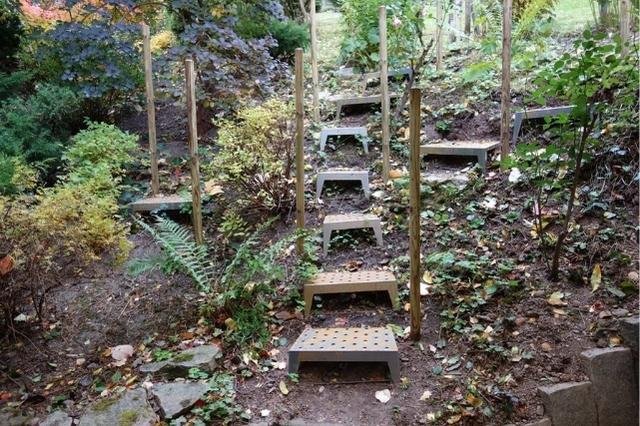
Caring for a sloping garden: make work easier with well-planned access routes
A garden on a slope is constantly changing: perennials grow over the edges of beds, shrubs spread out and new plantings need regular watering. Areas that were easy to reach when the garden was first laid out can later become awkward to access. If you want to care for your sloping garden comfortably in the long term, you should focus on the everyday tasks. Where do you need to stand to remove dead flowers? How will you get your tools to where they are needed? Well-positioned access routes and suitable steps on the slope make it easier to organise gardening work.

Start by identifying recurring tasks
Begin with a simple walk around the garden and make a note of the areas that need regular attention. These might include berry bushes, the centre of a flower bed, a water connection or the fence along the property boundary. Mark these points on a rough sketch. Note how often you work there and which tools you need to take with you. This will help you see whether a continuous route up the slope is sufficient or whether additional access points would be useful. A low-maintenance sloping garden is designed around the tasks you actually carry out. It is particularly helpful to distinguish between routes you use frequently and areas you only need to reach occasionally for specific gardening tasks. Consider both the outward and return journeys.
Plan access routes right up to the work area
A path to the top of the property does not automatically provide access to every flower bed. So consider which plants you can reach from the planned access point. If you would have to lean far forward or stretch a long way to the side, you may need an access point closer to the work area.
Steps for slopes can bridge changes in height along these routes. Depending on the model and local conditions, our products can be used for permanent or mobile applications. A suitable surface, the right choice of steps and installation in accordance with the manufacturer's instructions are essential. You can find information about possible applications under Product benefits. Also allow enough room to move around so that branches and spreading leaves do not narrow the passage later on.
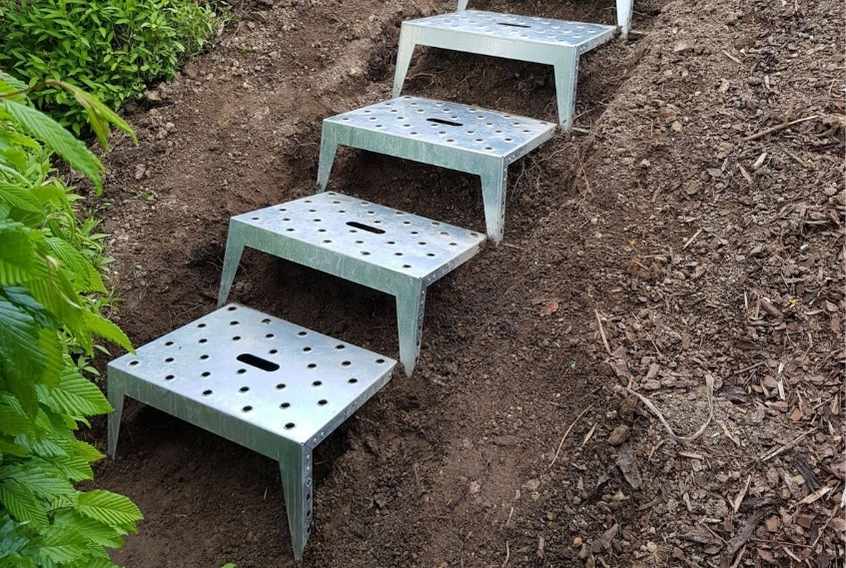
Consider plant growth when planning accessibility
A newly planted sloping garden may initially seem spacious. After a few growing seasons, however, the gaps can change considerably. When adding new plants, consider how wide they are expected to grow and keep access routes clear from the outset. Place plants that need frequent attention where they are easy to reach. Areas that need less frequent maintenance can be further away, provided a suitable access route remains available. For existing beds, it is worth taking stock: which plant is obscuring a step? Where is overhanging growth making it difficult to pass? Small adjustments can improve access without having to redesign the entire planting scheme.
Organise tools and clippings sensibly
Many unnecessary trips are made because secateurs, gloves or a collection container have been left behind. Before you start work, gather everything you need for the area in question. A suitable tool bag keeps smaller items organised and makes them easier to carry. Sharp tools should be stored safely.
In a sloping garden, it also helps to have an easily accessible collection point on a suitable level surface. You can temporarily store clippings there before taking them to the compost heap. Keep steps and passageways clear. Divide larger quantities into manageable portions and avoid carrying loads that could affect your vision or balance. Plan the transport of materials as carefully as access to the plants.
Build checks into your gardening routine
When you regularly walk around the garden, take a look at the paths too. Soil, leaves and cut branches should not be left on the treads. Also check whether plants are obscuring the edges of the steps or hoses are crossing the passageway.
In a sloping garden, the ground and anchoring also need to be checked. Follow our installation and safety instructions: do not use the steps in rain, wet conditions, ice or snow. Before using them again, check that they are stable and that the ground is sound. If you notice any damage or movement, do not use the access route in question until it has been properly repaired. A regular inspection schedule helps you spot changes early.
Start with a manageable area
You do not need to create new access to every part of the garden at once. Start with the bed that needs the most frequent attention or a route that has been awkward to use. Then see whether the paths suit your working routine and identify any other access points that are genuinely needed.
After using the routes several times, make a note of where you are taking unnecessary detours or need somewhere to put your tools and materials. These observations will help you plan the next improvement and make better use of existing access routes in your day-to-day gardening.
This is how you can improve your sloping garden step by step. Compare suitable options in our product finder for steps for slopes, taking the gradient, tread surface and finish into account. If you have any questions about choosing the right product, our team will be happy to advise you.
Posted in:
All posts
Related posts
 Now there is also a railing to the slope steps and to the stairs on the slope.
The poles are mounted individually and can be adjusted to the slope.
Read more
 Especially in autumn, when it gets slippery, the slope steps are a great help!
With slope steps you stand safely on the slope even in autumn.
Read more
 Slope steps are now also available powder-coated!
Slope steps are now also available in coloured versions.
Read more